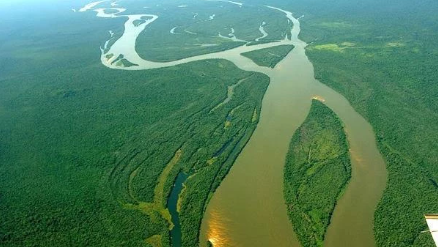
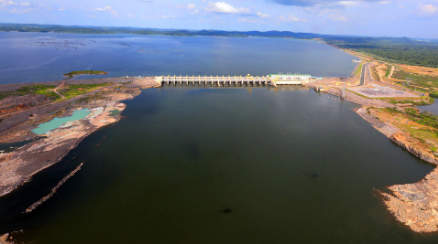
The research project “Families of the River: Memories of Work and Life in the Face of the Construction of Belo Monte,” coordinated by Professor Elizabete Vidal of the Institute of Letters and Communication (ILC) at the Federal University of Pará (UFPA), in partnership with the Altamira University Campus and the Salvaterra Institute, is currently in its fieldwork phase in Altamira. The research identifies, monitors, records, discusses, debates, and disseminates the impacts caused by the construction of the Belo Monte Hydroelectric Plant by the BMCC – Belo Monte Construction Consortium, in the municipality of Vitória do Xingu, in the Trans-Amazonian region of Pará.
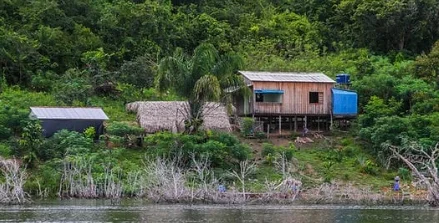
The research project developed by Mr. Alexandre Diniz, a postgraduate student in Water Resources Management at ProÁgua/UERJ, in partnership with the Salvaterra Institute, is conducting a study on the quality of water consumed by Arapujá and Paratizão, communities in a rural area of Pará on the banks of the Xingu River, in the area of the Belo Monte hydroelectric dam reservoir, from March 2021 to March 2023.
The research project “MEMORIES OF VOLTA GRANDE DO XINGU: resettled in permanent protection areas – APP, impacted by Belo Monte Hydroelectric Power Plant – UHBM”, in 2020 and 2021, was coordinated by the Institute of Letters and Communication – professor of the ILC, of the Federal University of Pará – UFPA, Professor Dr. Elizabete Vidal, in partnership with the Altamira University Campus and the Salvaterra Institute, and continues the project “Families of the River: Memories of Work and Life for the Construction of Belo Monte”, with the objective of identifying, recording, discussing and disseminating the impacts caused by the construction of the Belo Monte Hydroelectric Complex – BMHC, on the riverside families of Volta Grande do Xingu, over the last 8 years.
The direct construction of the Belo Monte Hydroelectric Complex affected hundreds of families, forcing them to abandon their homes. The acronym UHBM refers to a living organism, whose heart beats rapidly, in a strong body, in constant movement and transformation. These are veins, arteries, and vessels that require continuous monitoring to identify the impacts caused by this system. Considering that the studies carried out by the EIAs – Environmental Impact Studies and EIRs – Environmental Impact Reports, did not predict the impacts that the Xingu River dam would cause on the lives and work of residents in areas affected by the project, this study, coordinated by the Institute of Letters and Communication – professor of the ILC, Federal University of Pará – UFPA, Professor Dr. Elizabete Vidal, in partnership with the National Museum of Rio de Janeiro, the Federal University of Rio de Janeiro, and the Salvaterra Institute, consists of a discursive analysis of narratives from riverside families of the Volta Grande do Xingu River, impacted by the construction of the Belo Monte Hydroelectric Dam, in Vitória do Xingu Municipality/PA.
Cultural Center of Knowledge - Library of the Future
The project aims to implement Cultural Knowledge Centers in municipal elementary and basic education schools in the State of Pará, based on the concept of the Library of the Future. In this sense, the project encourages Education, Culture, and Knowledge, contributing directly to the formation of citizens, subjects of their own stories, and to the Sustainable Development Goals, namely Quality Education (4); Gender Equality (5) and Sustainable Cities and Communities (11). For the formation of intellectual capital and in defense of a space for debate, there is nothing more appropriate than the existing library spaces in the schools that will be served by the project. It is in this particular space that the valuing of knowledge is highlighted. Stimulating reading and creativity will be offered to children and young people, forming future adults responsible for the transmission of knowledge. From this perspective, the project intends to expand the spaces of traditional libraries, introducing Guided Reading, a Cinematheque, Comic Books, a Multimedia Room, a Makerspace, an Amazon Space, an Inclusion Space, and Sign Language. During the execution of the project, from January 2024 to June 2025, actions will be developed to promote exchange between the schools served by the project.